Introduction to copyright and generative artificial intelligence
In this post, I provide some introductory remarks on copyright and generative artificial intelligence (GenAI) for colleagues in the accountancy department at the John Molson School of Business (JMSB) at Concordia University.
1. How does copyright work?
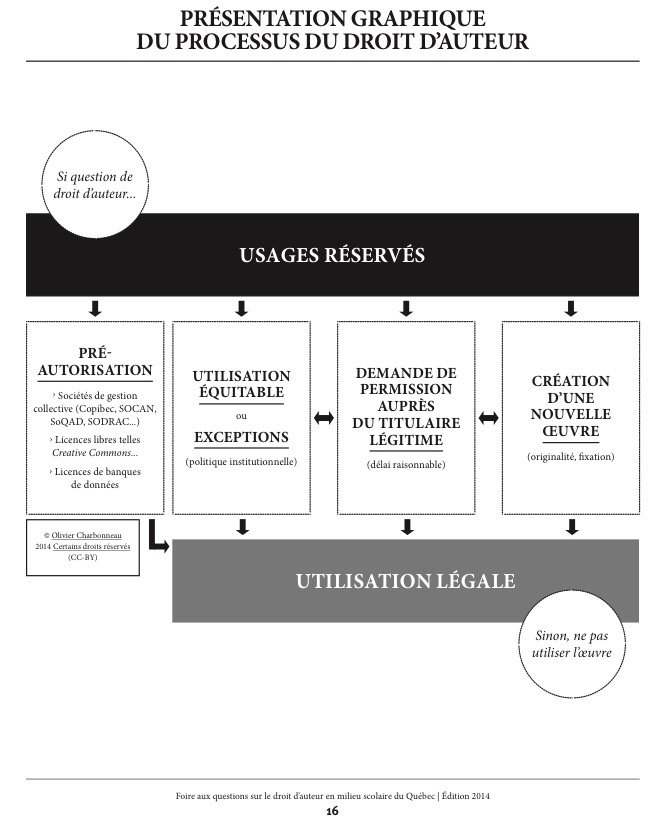
Copyright is enacted by a federal statute, whereby conferring economic and artistic rights to creators of qualifying works. These rights may be mobilized by contracts or agreements, often called licenses when they are limited in scope. Copyright agreements mobilize copyrights with regards to many components, such as monetary flows, duration and termination, geographical dimension, markets, exclusivity, transferability… the complexity and nature of copyright agreements is up to the parties involved, the federal statute allows for an almost infinite combination of arrangements. When mobilizing exclusive rights, an agreement is necessary.
Copyright ownership is usually vested in the original creator. In Canada, employers are assigned the ownership of copyrighted works produced by their full time & permanent employees, unless their work contract stipulates otherwise. At Concordia, the CUFA collective agreement reverts copyright back to faculty with the University retaining a license on all materials for educational purposes for a decate. On the other hand, the CUPFA collective agreement, governing contractual workers, is silent in the matter.
In recent years, the digital environment has introduced a new kind of agreement, open licenses, which facilitate the sharing, reuse or distribution of online content without remuneration. These include Creative Commons or open source software licenses. At Concordia University Libraries, we support the transition to open access through open textbooks, open scholarship, and Spectrum, our open archive. Open licenses are essential to the movement toward open access.
In addition to economic and artistic rights, the Copyright Act edicts exceptions that are afforded to user communities in specific and limited circumstances. The most notable are the “fair dealings” exceptions, not to be confused with “fair use” in the USA. In Canada, there are eight fair dealings: education, research, private study, news reporting, parody, satire, criticism or review. In the “CCH Case” of 2004, the Supreme Court of Canada established boundaries to fair dealings. Other exceptions include those for the print disabled, for libraries and archives, or for educational institutions. When one qualifies for an exception, use may proceed with neither an agreement nor a payment. Libraries are often tasked with governing copyright exceptions.
Also, Copyright establishes institutions that govern the artistic, cultural, creative or communication ecosystems. These include collecting societies which automate or streamline rights clearance, a specialized tribunal, review parameters as well as other measures. In the educational sector, Copibec is a collecting society which offers licenses for reprography or digital use of textual material, most notably coursepacks. Similarly, the Library offers digital collections under licenses to the university community.
Finally, copyright interacts with many other legal regimes, most notably provisions in the Civil Code of Québec, which govern contracts or image rights, or federal telecommunications regulations, which govern what is broadcast on national airwaves.
For more information about Copyright, please access Concordia University Library’s Copyright Guide, the Policy on Copyright Compliance (SG-2), the Copyright Guidelines for instructors or simply ask your librarian before contacting anyone outside the organization about copyright.
1.1 Simplified copyright workflow
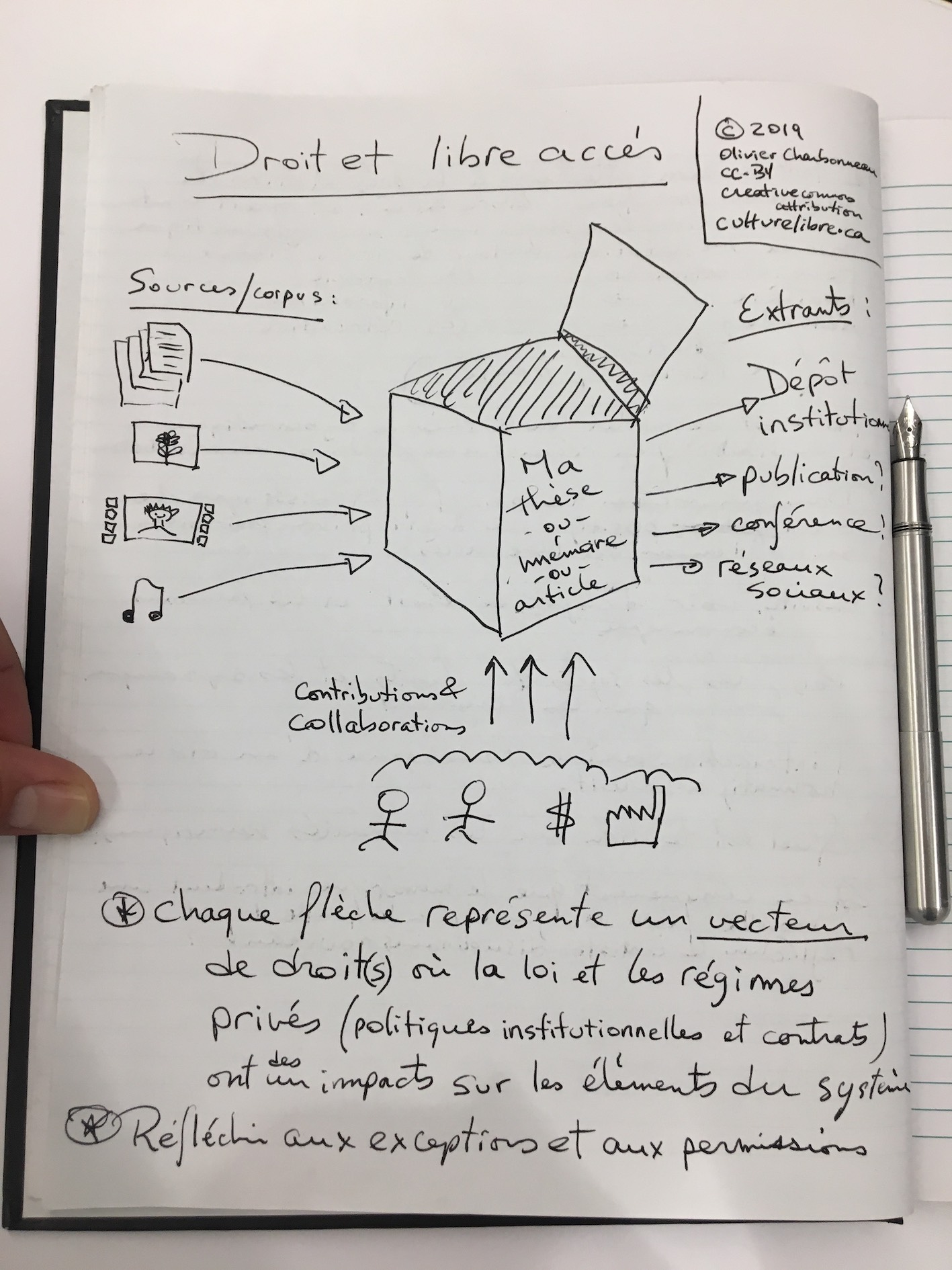
1.2 Digital works are often “compilations” of many other pieces
2. Generative Artificial Intelligence
2.1 GenAI at the Library
Concordia University Library offers many opportunities to engage with GenAI. These include:
GenAI Quickstart: Foundations for Faculty
Quick Things for Digital Knowledge
2.2 GenAI at Concordia
Guidelines for Teaching with Generative Artificial Intelligence
3. Conclusion
Your librarian offers a bespoke and dedicated consulting service and is available to meet you, your students or your class upon request.
Ce contenu a été mis à jour le 2026-03-24 à 8:27 am.